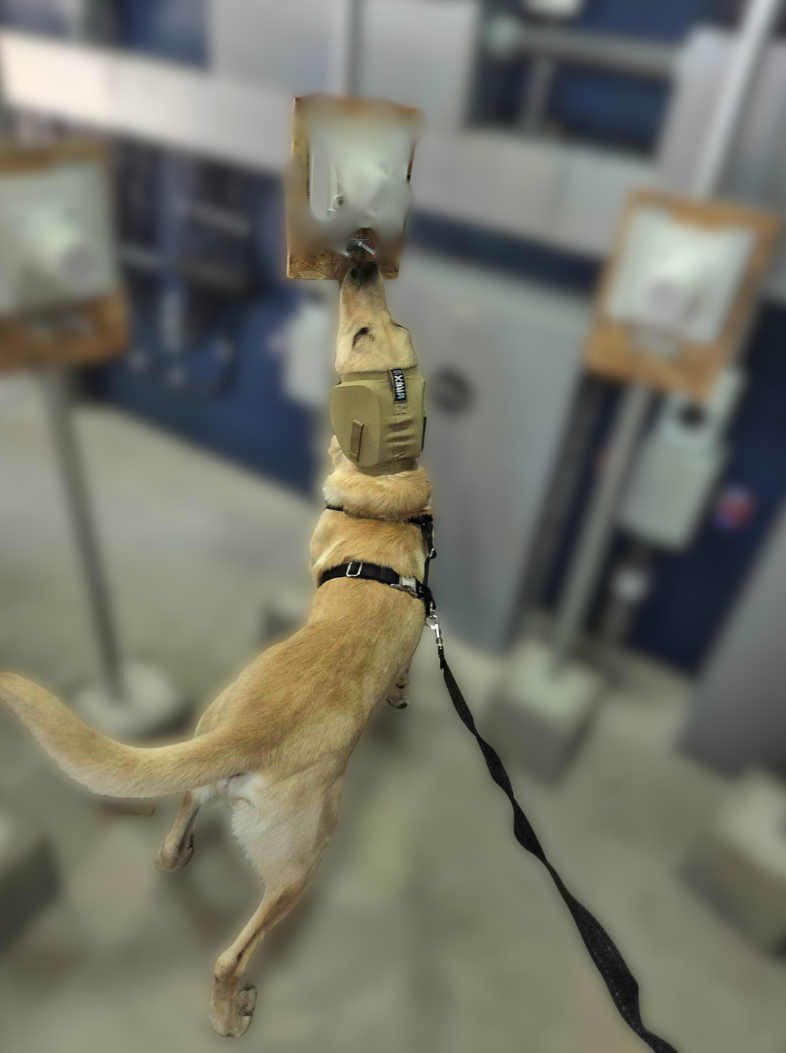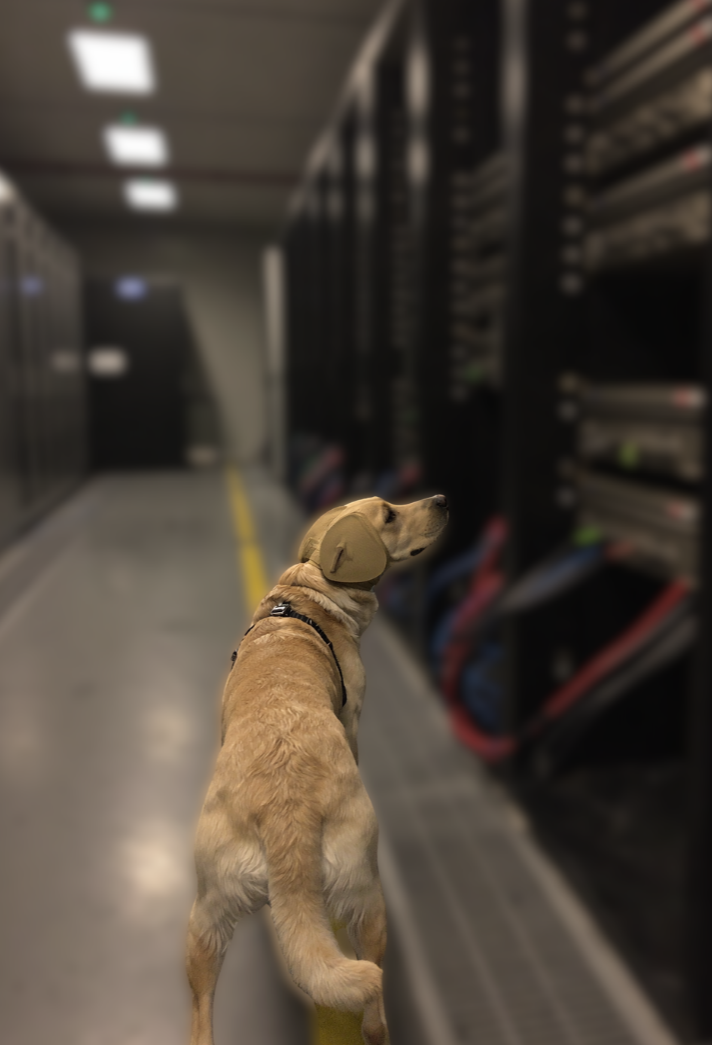
Detection dog working a live data center rack in ESD harness, Advanced BioAnalytic
Lithium Electrolyte Detection — Data Centers & Server Rooms

A failing battery
gives itself away.

Your instruments don't hear it. Our dogs do. When a lithium-ion battery seal breaches, the electrolyte carbonates reach the air. That's the signal a trained dog finds — before the failure becomes a fire.

Scroll
1.5ppt
Detection threshold (parts per trillion)
64 pts
Scent points in lab demonstration
750 CFM
Active airflow during lab runs
12+
AKC Scent Work titles — each dog
DIMETHYL CARBONATE ETHYL METHYL CARBONATE DIETHYL CARBONATE ELECTROLYTE BREACH EARLY WARNING DIMETHYL CARBONATE ETHYL METHYL CARBONATE DIETHYL CARBONATE ELECTROLYTE BREACH EARLY WARNING
Where we fit in

We don't replace your sensors.
We work the window before them.

Your Li-ion Tamer and NevadaNano systems are built to catch a battery that is already failing — the vent, the gas build-up. Our dogs find the trace electrolyte of a breaching battery weeks earlier, while it is still a quiet leak. Same timeline. Earlier point. No overlap, no competition.

EARLIEST FIRE Intact no emission · ignored Micro-leak trace electrolyte · ppt–ppb Acute vent sudden spike · 10 ppm/sec Gas build-up approaching %LEL Runaway ACUTE-EVENT LAYER Li-ion Tamer Gen 3 EXPLOSION-PREVENTION LAYER NevadaNano MPS THIS IS WHERE WE WORK Advanced BioAnalytic Canine breach audit weeks before any sensor is designed to trigger THE WINDOW YOUR SENSORS AREN’T BUILT TO SEE
EARLIEST FIRE THE WINDOW YOUR SENSORS MISS Intact no emission · healthy batteries ignored THIS IS WHERE WE WORK Advanced BioAnalytic Canine breach audit Micro-leak · trace electrolyte · ppt–ppb Alerts weeks before any sensor is designed to trigger. ACUTE-EVENT LAYER Li-ion Tamer Gen 3 Acute vent · sudden spike · 10 ppm/sec EXPLOSION-PREVENTION LAYER NevadaNano MPS Gas build-up · approaching %LEL Runaway thermal event · too late
Predictive · earliest
Advanced BioAnalytic
Canine breach audit

Finds the trace electrolyte of a breaching battery while it is still a quiet, room-temperature leak — the window before anything spikes.

Acute event
Li-ion Tamer Gen 3
Rate-of-change sensor

Catches the sudden vent — a rapid concentration jump of 10 ppm/sec. Built to see the spike, not the slow leak that precedes it.

Explosion prevention
NevadaNano MPS
Flammable-gas monitor

Guards the atmosphere as gas approaches explosive levels (%LEL). The last line — and orders of magnitude above a trace leak.

Your existing systems stay exactly where they are, doing exactly what they do best. We simply add the layer nothing else is watching.

Founding-partner site · no cost

See the earliest layer in your facility.

We're selecting a small number of facilities as founding-partner sites. As a founding partner, your audit is at no cost — and together we generate the first field-validation data for canine breach detection in live battery environments. If you'd like to see whether your site qualifies, reach out.

Canine sensitivity figures reflect published olfaction research (Concha et al., Frontiers in Veterinary Science, 2019), not Advanced BioAnalytic field measurements. Founding partners generate the first field data.

001 / The Threat

A lithium-ion battery failure doesn't announce itself.

Thermal runaway in lithium-ion batteries begins long before visible signs. The electrolyte solvents — dimethyl carbonate (DMC), ethyl methyl carbonate (EMC), and diethyl carbonate (DEC) — are sealed inside a healthy battery. When that seal is compromised, those compounds reach the air.

That moment of breach is the earliest possible warning. Fixed gas sensors on a data center floor aren't sensitive enough to catch it. Our dogs are.

Field precedent: U.S. FAA flight-line battery detection program (DOT/FAA/TCTN-23/63, 2023) and WFS / DiagNose six-month air-cargo trial (Lyon, 2022) confirm operational canine detection of lithium-battery odor. ABA's electrolyte-specific approach adds selectivity to distinguish a failing battery from a healthy one.

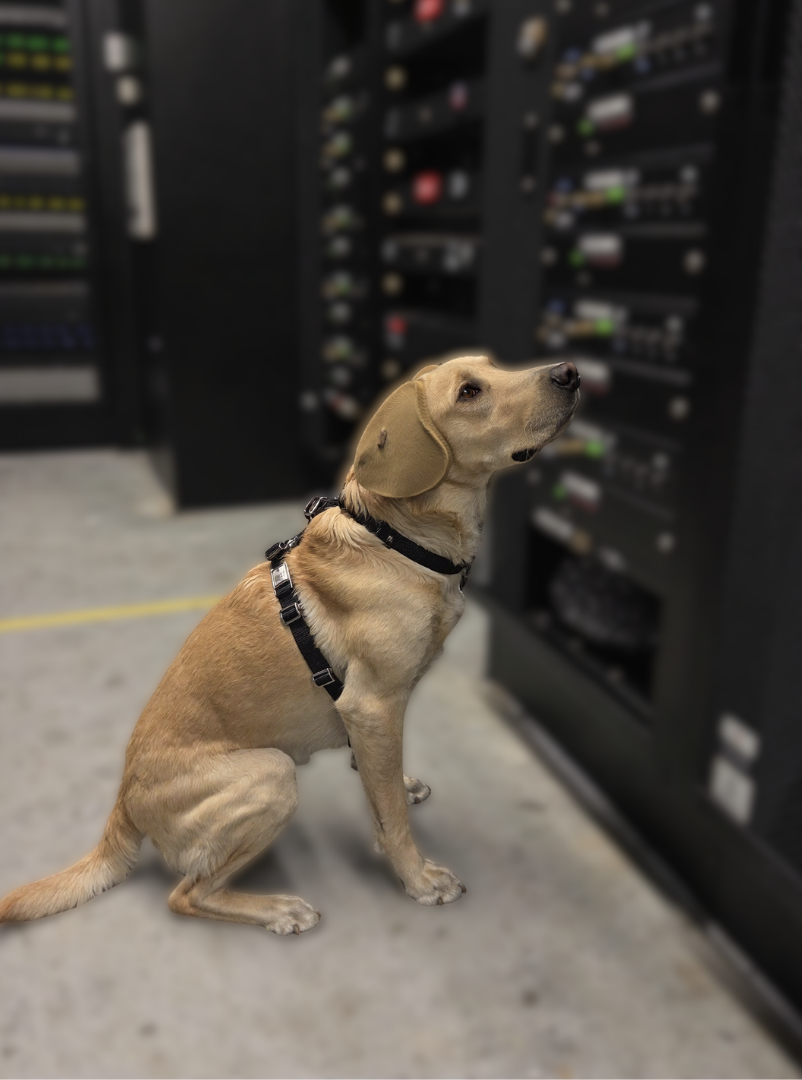
Detection dog locating scent in server environment
002 / The Selectivity

Not trained on lithium.
Trained on what comes out.

This distinction is the whole point. Lithium and battery hardware are present in every intact battery in your data center. A dog trained on them would alert on thousands of healthy batteries and tell you nothing useful.

Our dogs are imprinted on the three electrolyte solvents — DMC, EMC, DEC — that are sealed inside a sound battery and only reach the air when a seal is breached. They ignore every healthy battery and alert only on a compromised one.

Target Present in healthy battery Released on breach Trained on
Lithium metal No
Battery casing / PCB No
DMC · EMC · DEC (electrolytes) Sealed ✓ On breach Yes — target
Detection dog working a search training scenario
"No competitor has this. A dog that can work inside a live server room without generating a single spark."
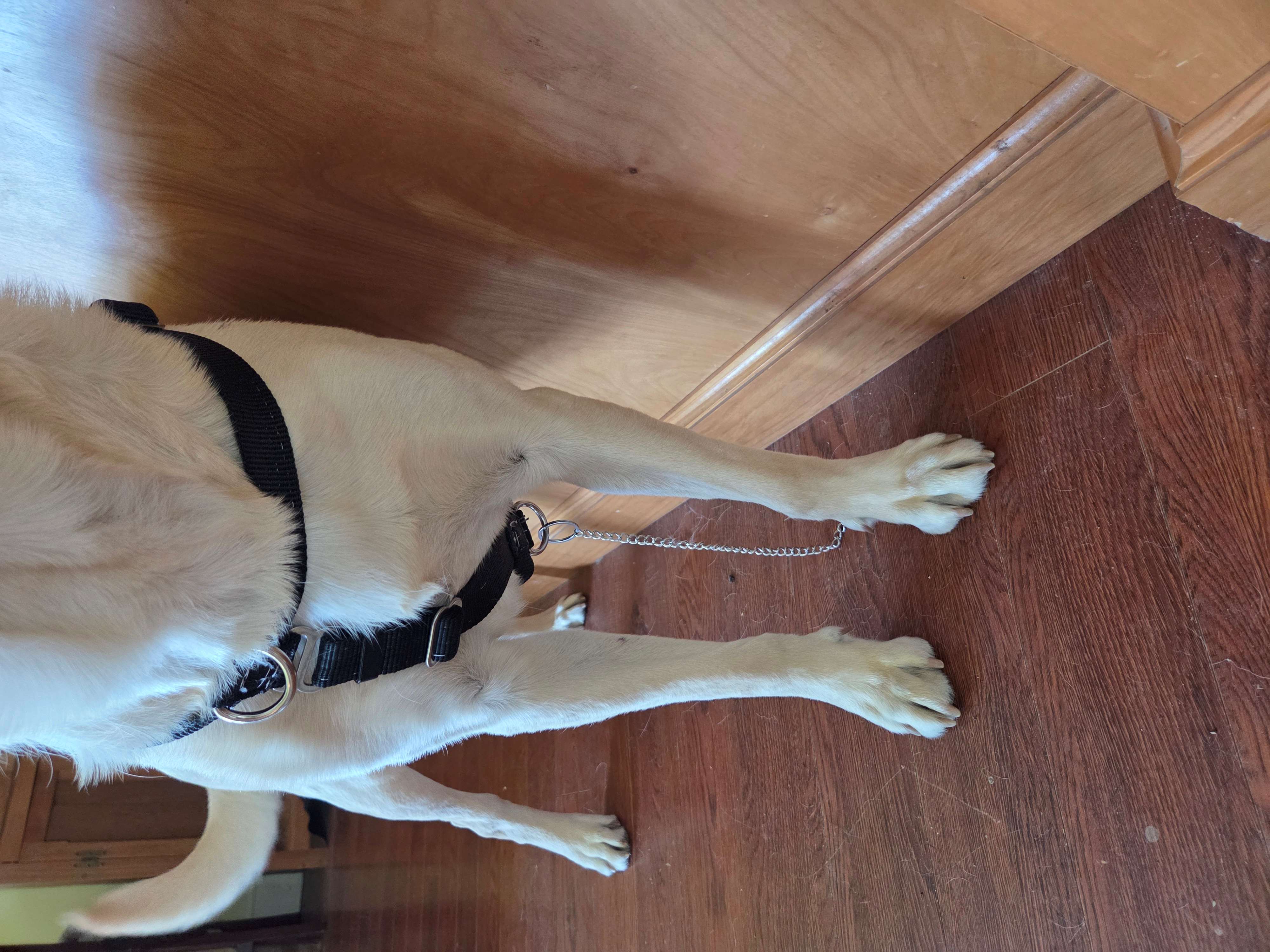
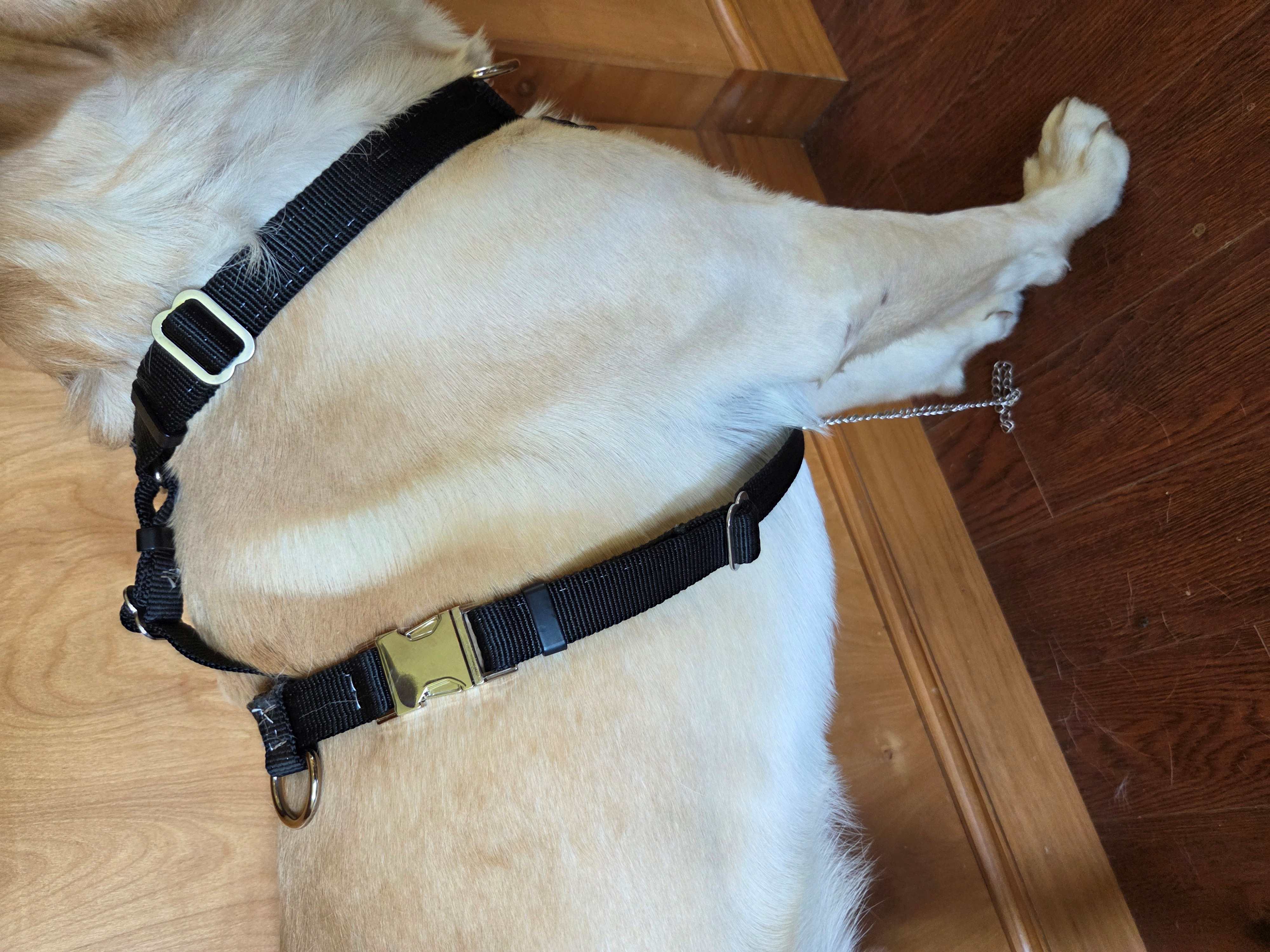
The ESD Harness — Advanced BioAnalytic
ESD harness chest strap with grounding chain — detail
ESD harness side view — brass buckle detail
003 / The ESD Harness

Amish-made.
Silver-threaded.
The only one in the industry.

The electrostatic discharge (ESD) harness is an exclusive Advanced BioAnalytic invention. Custom-built by an Amish harness maker who hand-sews silver thread directly into the harness material.

That silver thread captures static electricity from the dog's coat and carries it through the harness to a grounding chain — preventing any spark risk inside a live server room. Traditional craftsmanship. Data center safety engineering. One purpose.

Our dogs also wear military-grade hearing protectors in environments with active cooling fans and UPS systems.

004 / The Dog

Rocco.

Rocco is a Labrador Retriever purpose-trained for lithium electrolyte detection — in active scent training since February 2024. Bred from Labncroft Partnership's four concurrent working Lab pedigree lines, a 100-year family tradition rooted in field-performance genetics going back to 1880s Setter dogs.

CGC SWN SWCN SWIN SWEN SWBN SWCA SWIA SWBA

These are independently judged AKC titles earned in competition — across every Scent Work element (Container, Interior, Exterior, Buried) at Novice and Advanced levels. A third party has repeatedly verified each dog's ability to find target odors and work past distractions in varied real-world settings.

005 / The Founding Partner Program

We're building the field data.
Join us in building it.

Our dogs reliably alert on all three target carbonates under controlled lab conditions — 64 scent points, 750 CFM active airflow, proofed against common data-center distractors including isopropyl alcohol, Deoxit, CRC QD contact cleaner, Staticide, and propylene glycol.

The next step is field validation inside a live data center: real rack airflow, fan noise, and background scent environment. That's where we generate the quantified metrics this program hasn't yet measured outside the lab — detection rate, localization accuracy, and false-alarm rate.

Founding-partner sites become part of the scientific record. Your facility's validated data contributes to a peer-reviewed foundation for this service line — and founding partners are named in that documentation.

We're currently evaluating data centers for the founding cohort. Consideration is based on facility configuration, battery density, and operational access. This is a mutual evaluation.

Canine sensitivity baseline: Peer-reviewed work documents canine detection of target VOCs down to 1.5–40 parts per trillion (Concha et al., Frontiers in Veterinary Science, 2019).

Join the Founding Partner Program.

We're selecting founding data center partners for the field validation program. No commitment — just a conversation about your facility and whether we're a fit.

Tell us about your facility and we'll reach out within one business day.

info@advancedbioanalytic.com  ·  (765) 585-1563  ·  Veedersburg, IN 47987